治理研究 ›› 2026, Vol. 42 ›› Issue (3): 108-126.

• 人口治理 • 上一篇    下一篇

“自愿”的生产:治理嵌入中的社会资本与延退意愿

吴玉锋, 李龙林, 聂建亮   

  • 收稿日期:2025-09-08 出版日期:2026-05-15 发布日期:2026-07-02
  • 作者简介:吴玉锋,西北大学公共管理学院教授、博士生导师,西北大学社会保障研究院院长;
    李龙林,西北大学社会保障研究院研究助理;聂建亮,西北大学公共管理学院教授、博士生导师。

Production of “Voluntariness”: Social Capital and Delayed Retirement in Governance Embedment

Wu Yufeng, Li longlin, Nie Jianliang   

  • Received:2025-09-08 Published:2026-05-15 Online:2026-07-02

摘要:

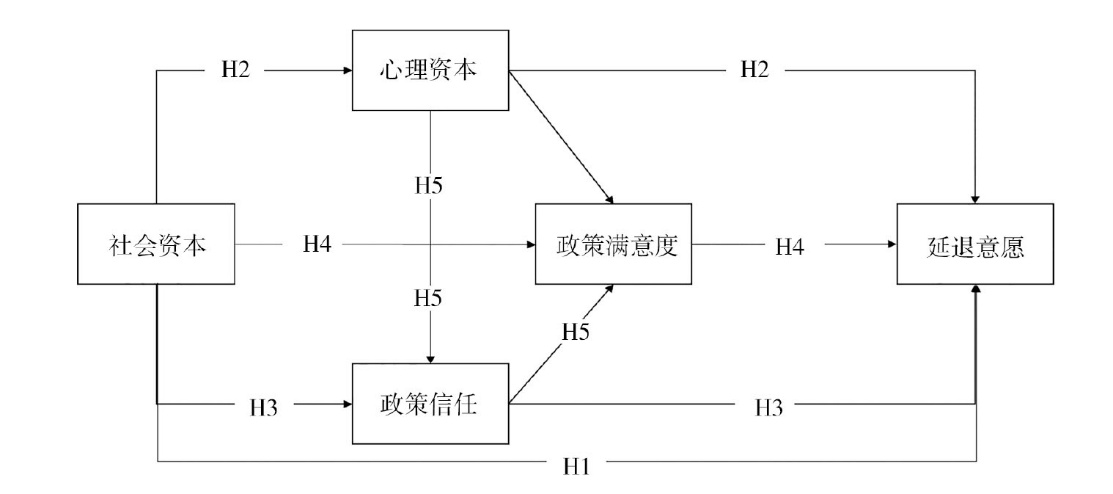
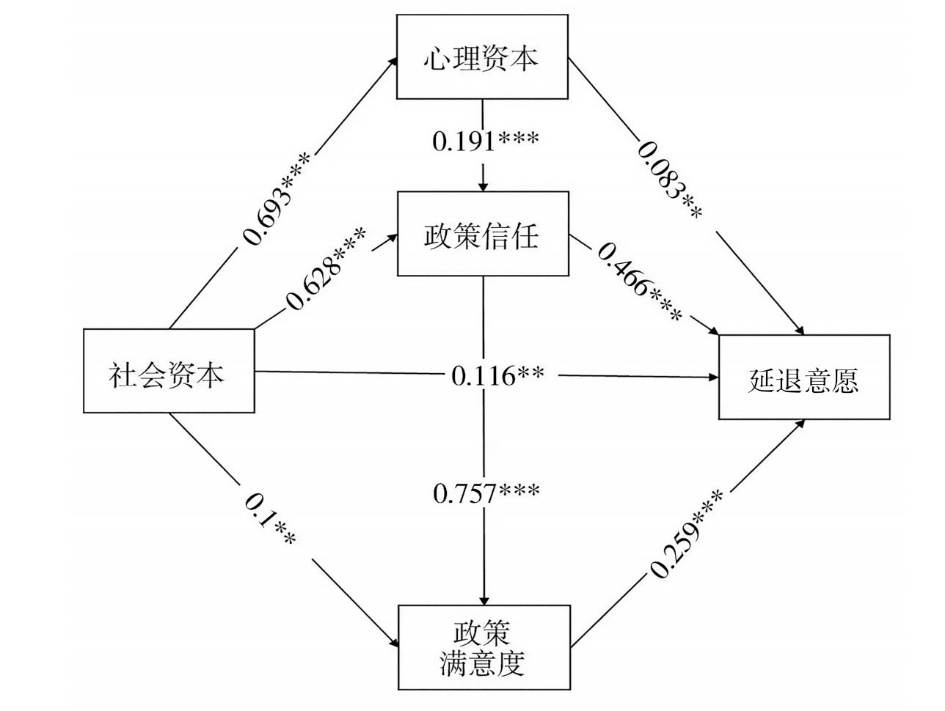
渐进式延迟退休政策落地背景下,劳动者的延退意愿反映了其对政策的内在回应和自愿遵从,深刻影响政策的实施效果。基于2025年对西安市中老年劳动者的问卷调查,采用结构方程模型揭示了社会资本对个体延退意愿的影响机制。研究发现:(1)社会资本是延退意愿的重要前置变量,对延退意愿有显著的直接促进作用;(2)社会资本分别通过积累心理资本、增强政策信任、提升政策满意度,间接促进劳动者的延退意愿;(3)相较于心理资本与政策满意度,政策信任在社会资本影响延退意愿的过程中发挥更为突出的中介效应;(4)社会资本通过“心理资本—政策信任—政策满意度”所构成的链式中介路径对延退意愿产生显著影响,展现出社会资本在政策执行中的“治理嵌入”特征。为优化延迟退休政策实施效果,应当系统提升社会资本存量质量,构建社会资本、心理资本、政策信任与政策满意度的协同支持机制,并强化政策信任生成与扩散,为政策目标的柔性落地提供保障。

关键词: 延退意愿, 社会资本, 心理资本, 政策信任, 政策满意度

Abstract:

Against the backdrop of the implementation of the progressive delayed retirement policy, workers' delayed retirements reflect their internal response and voluntary compliance with the policy, profoundly impacting its effectiveness. Based on a 2025 questionnaire survey of middle-aged and older workers in Xi'an, this study employs a structural equation model to reveal the mechanism through which social capital influences individual delayed retirement intention. The findings are as follows: First, social capital is a significant antecedent variable for delayed retirement intention, exerting a direct positive effect. Second, social capital indirectly enhances workers' delayed retirement intention by stimulating individual psychological expectations, strengthening policy trust, and improving policy satisfaction. Third, compared to the mediating roles of psychological capital and policy satisfaction, policy trust plays a more prominent mediating role in the relationship between social capital and delayed retirement intention. Fourth, social capital significantly influences delayed retirement intention through a chain mediation pathway of “psychological capital→policy trust→policy satisfaction,” demonstrating the “governance embedment” characteristic of social capital in policy implementation. Based on these findings, this paper suggests that during the implementation of the delayed retirement policy, efforts should be made to systematically enhance the quality of social capital stock and the level of governance embedment. This would require constructing a synergistic support mechanism involving social capital, psychological capital, and institutional trust. This would provide structural guarantees for the flexible achievement of policy objectives by strengthening the generation and diffusion of policy trust. This research highlights the importance of institutional perception and trust structures in reshaping public behavioral expectations during complex policy implementation and expands the explanatory scope of social capital theory in behavioral research.

Key words: delayed retirement intention, social capital, psychological capital, policy trust, policy satisfaction

中图分类号: