治理研究 ›› 2026, Vol. 42 ›› Issue (3): 20-32.

• 政府治理 • 上一篇    下一篇

新兴场域中地方政府创造性政策执行何以可能:组织学习的视角

姜玲, 杜辉煌   

  • 收稿日期:2025-09-14 出版日期:2026-05-15 发布日期:2026-07-02
  • 作者简介:姜玲,中央财经大学政府管理学院院长、教授;
    杜辉煌,中央财经大学政府管理学院博士研究生。
  • 基金资助:
    教育部哲学社会科学研究重大课题攻关项目“新时代中国城市更新行动的社会空间效应研究”(24JZD036)

How Is Creative Policy Implementation by Local Governments Possible in Emerging Fields? An Organizational Learning Perspective

Jiang Ling, Du Huihuang   

  • Received:2025-09-14 Published:2026-05-15 Online:2026-07-02

摘要:

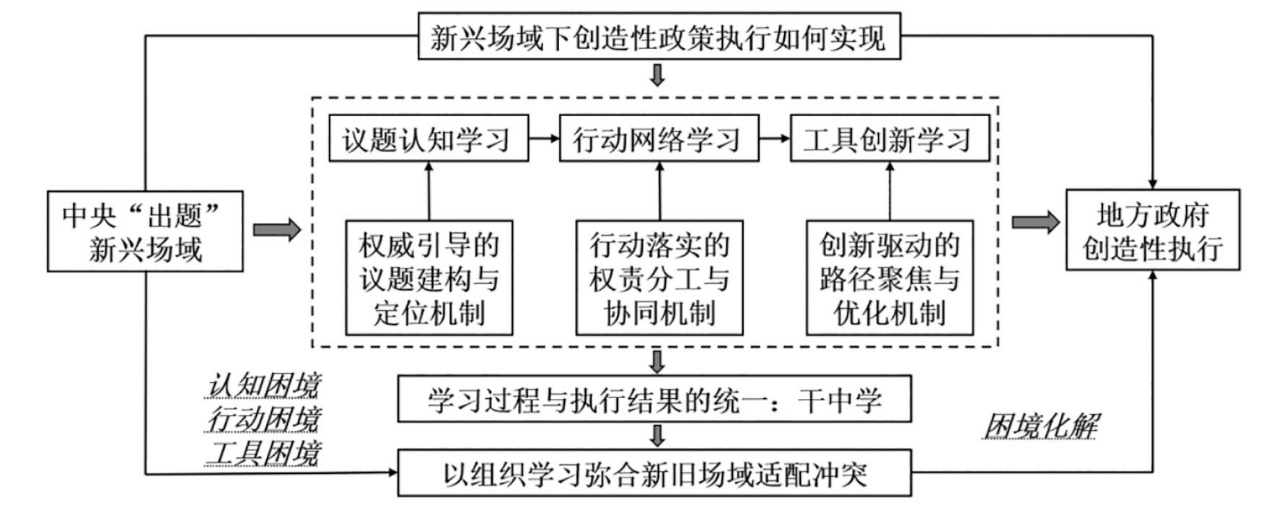
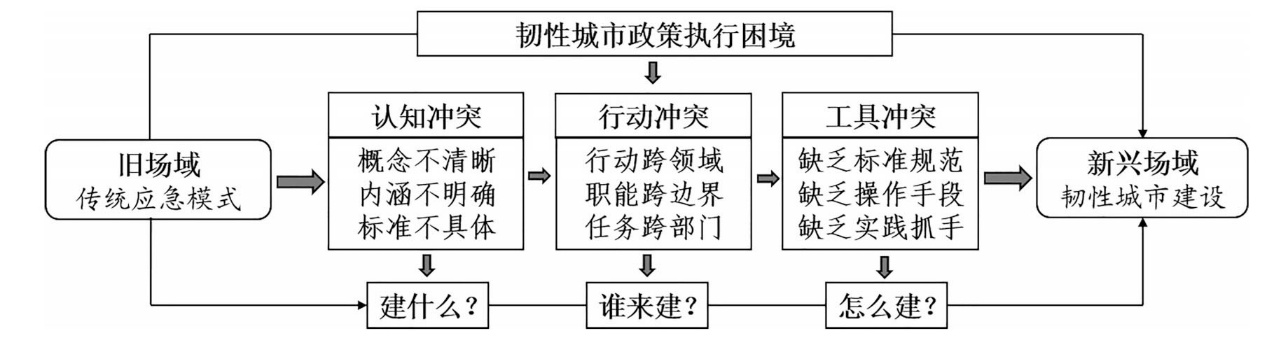
在新一轮科技革命与治理范式转型交汇期,韧性城市建设等新兴治理场域加速涌现,对地方政府以前瞻性思维创造性落实中央战略提出更高要求。既有研究多聚焦“为何”与“何种”创造性执行,较少系统解释“如何生成”的内在机制与能力生成路径。本文引入组织学习视角,构建“议题认知—网络行动—技术工具”分析框架,对实践进行过程追踪,揭示地方政府在新兴场域中实现创造性执行的微观机制。研究发现:韧性城市作为重塑安全治理逻辑的新范式,在认知框架、行动结构与工具集合层面与传统应急管理体制产生多重适配张力;地方政府通过“议题建构与定位—权责分工与协同—路径聚焦与优化”的三阶段学习机制,将中央宏观话语落实为在地化治理方案,并逐步弥合新旧场域冲突;创造性执行并非先验能力,而是依托“干中学”模式,在实践—反思—制度化的迭代中生成。研究推进了创造性执行理论的情境化解释,为新兴场域中的地方政府能力建设提供了“组织学习—制度创新”的政策启示。

关键词: 创造性执行, 新兴场域, 组织学习, 韧性城市

Abstract:

Amid the convergence of a new wave of technological revolution and the transformation of governance paradigms, emerging governance fields such as resilient city construction are rapidly expanding, placing higher demands on local governments to creatively implement central strategies with forward-looking thinking. Existing studies largely focus on why and in what forms creative implementation occurs, but they pay relatively limited attention to the internal mechanisms and capability-generation processes through which it is realized. Drawing on the perspective of organizational learning, this study constructs an analytical framework of “issue cognition-networked action-technical tools.” It employs process tracing to uncover the micro-level mechanisms through which local governments achieve creative policy implementation in emerging governance fields. The findings indicate that resilient city construction, as a new paradigm reshaping the logic of urban safety governance, generates multiple adaptation tensions with the traditional emergency management system at the levels of cognitive frameworks, action structures, and tool configurations. Through a three-stage learning mechanism involving “issue construction and positioning-division of responsibilities and coordination-path focusing and optimization,” local governments translate the central government’s macro-level discourse into localized governance solutions and gradually reconcile the conflicts between old and new governance fields. Creative implementation is not an a priori capability; rather, it is generated through a “learning-by-doing” model characterized by iterative cycles of practice, reflection, and institutionalization. This study advances the contextualized explanation of creative implementation theory and provides policy implications for local government capacity building in emerging governance fields through the linkage between organizational learning and institutional innovation.

Key words: creative implementation, emerging governance fields, organizational learning, resilient cities

中图分类号: