治理研究 ›› 2026, Vol. 42 ›› Issue (4): 107-122.

• 情感治理专题 • 上一篇    下一篇

从情感嵌入到韧性生成:基层公共文化服务供给的情感治理机制研究——基于S市W区的实证考察

周义程, 于英鑫   

  • 收稿日期:2025-08-27 出版日期:2026-07-15 发布日期:2026-09-09
  • 通讯作者: 于英鑫,苏州大学政治与公共管理学院政府治理研究所研究助理。
  • 作者简介:周义程,苏州大学中国特色城镇化研究中心暨江苏省新型城镇化与社会治理协同创新中心研究员,苏州大学地方政府与社会治理优秀创新团队首席专家、教授、博士生导师
  • 基金资助:
    国家社会科学基金项目“服务对象全过程有效参与公共服务购买的实现路径研究”(24BZZ097);江苏高校哲学社会科学研究重大项目“整体性治理视角下江苏‘互联网+政务服务’运行困境与优化路径研究”(2022SJZD134)

From Emotional Embedding to Resilience Generation: The Emotional Governance Mechanism of Grassroots Public Cultural Service Provision—An Empirical Study of W District, S City

Zhou Yicheng, Yu Yingxin   

  • Received:2025-08-27 Published:2026-07-15 Online:2026-09-09

摘要:

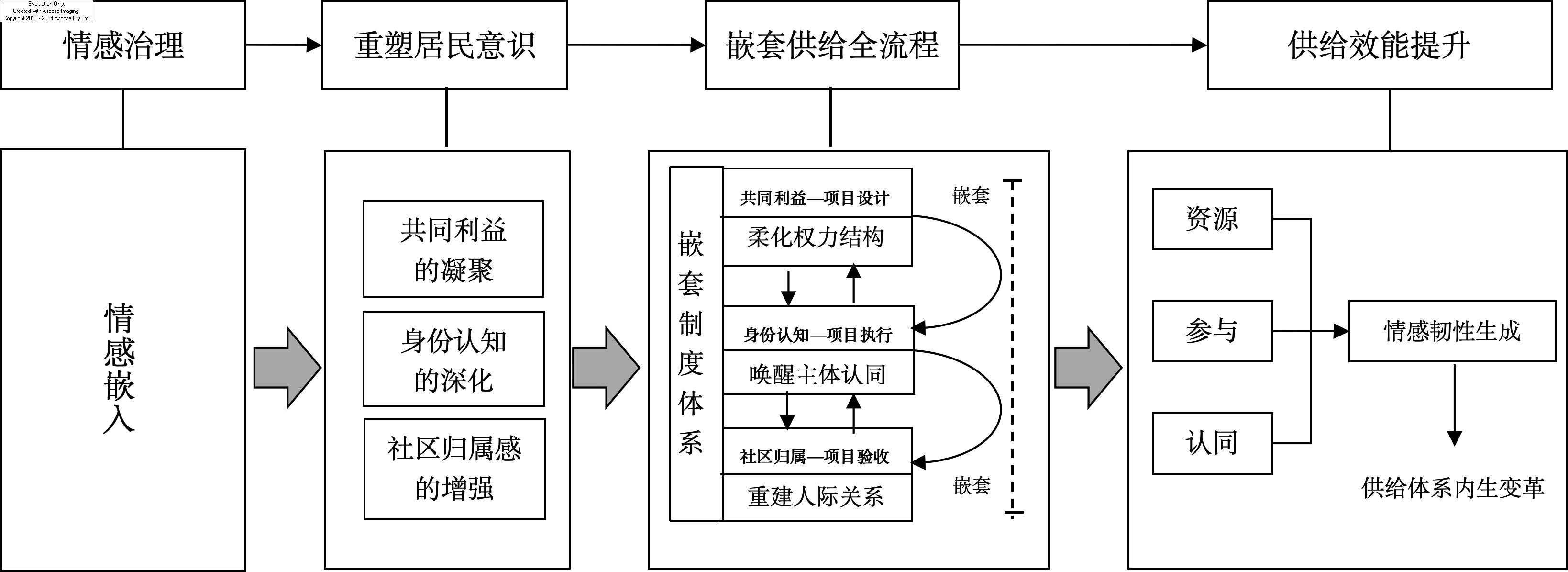
情感嵌入被视为提升基本公共文化服务供给效能的重要途径,但其能否驱动供给系统的内生性变革,即推动供给逻辑、运行机制与主体间关系的实质性转变,仍是一个悬而未决的议题。鉴于此,本研究以S市W区的实践为考察对象,从情感治理的视角出发,构建“情感嵌入→重塑居民意识→嵌套供给全流程→情感韧性生成→供给效能提升”的机制模型,探究情感如何嵌入基层公共文化服务供给全流程并转化为情感韧性,进而提升供给效能。研究发现,情感治理在重塑居民意识的基础上,通过柔化权力结构、唤醒主体认同、重建人际关系,嵌套于公共文化服务供给的项目设计、执行与验收全流程,最终促成“情感韧性”的生成。情感韧性则成为驱动供给系统内生性变革、提升服务效能的核心动力。

关键词: 公共文化服务供给, 情感治理, 情感嵌入, 情感韧性, 供给流程, 供给效能

Abstract:

Emotional embedding is widely considered an important approach to enhancing the effectiveness of basic public cultural service provision. However, whether it can drive endogenous changes within the provision system—specifically, substantive transformations in its underlying logic, operational mechanisms, and stakeholder relationships—remains an open question. This study draws on the practices of W District in S City and, from the perspective of emotional governance, constructs a mechanism model: “emotional embedding→ reshaping residents’ awareness→embedding throughout the entire provision process→generation of emotional resilience→enhancement of provision effectiveness.” It investigates how emotions are embedded across the full cycle of grassroots public cultural service provision—from project design and implementation to evaluation and acceptance—and how they are subsequently transformed into emotional resilience, ultimately improving provision effectiveness. The findings reveal that, by reshaping residents’ awareness, emotional governance operates through three key pathways—softening power structures, fostering stakeholders’ sense of identification, and rebuilding interpersonal relationships—to become embedded throughout the entire provision process, ultimately fostering the generation of “emotional resilience.” This emotional resilience, in turn, serves as a core driving force for both endogenous transformation of the provision system and the improvement of provision effectiveness.

Key words: public cultural service provision, emotional governance, emotional embedding, emotional resilience, provision process, provision effectiveness

中图分类号: