治理研究 ›› 2026, Vol. 42 ›› Issue (2): 141-156.

• 人口治理 • 上一篇    

托育服务政策如何“如愿以偿”:破解托育服务供需困境的政府干预路径研究

石人炳, 王昕迪   

  • 收稿日期:2025-06-05 出版日期:2026-03-15 发布日期:2026-05-22
  • 通讯作者: 王昕迪,华中科技大学社会学院博士研究生。
  • 作者简介:石人炳,华中科技大学社会学院教授、博士生导师。
  • 基金资助:
    国家社会科学基金一般项目“性别失衡背景下的城乡异向婚姻挤压问题研究”(21BRK005);贵州省哲学社会科学规划课题“贵州人口增长趋势与劳动力供给研究”(23GZQN42)

How Childcare Policies Achieve Their Objectives: A Study on Government Intervention Pathways to Resolve the Supply-Demand Imbalance in Childcare Services

Shi Renbing, Wang Xindi   

  • Received:2025-06-05 Published:2026-03-15 Online:2026-05-22

摘要:

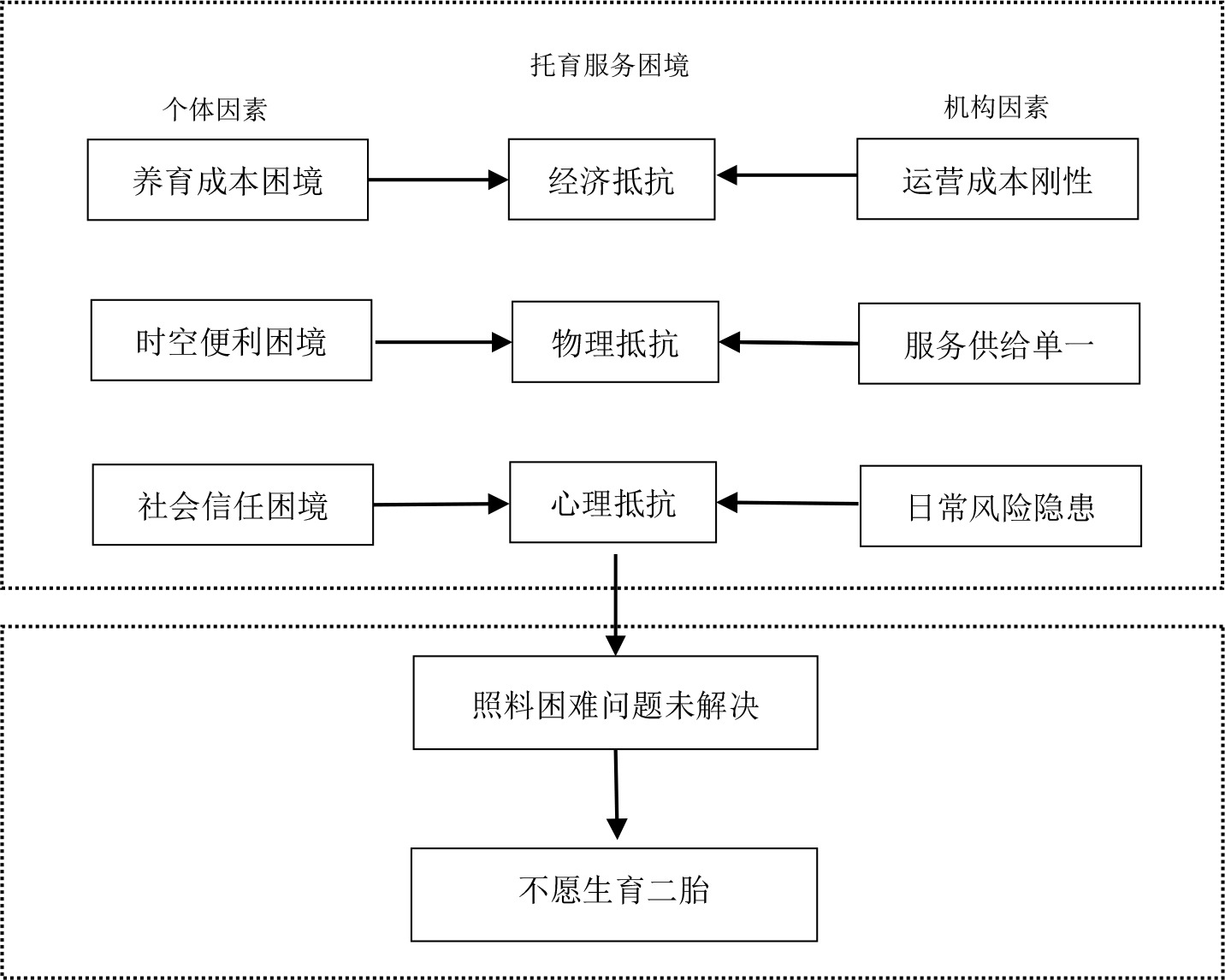
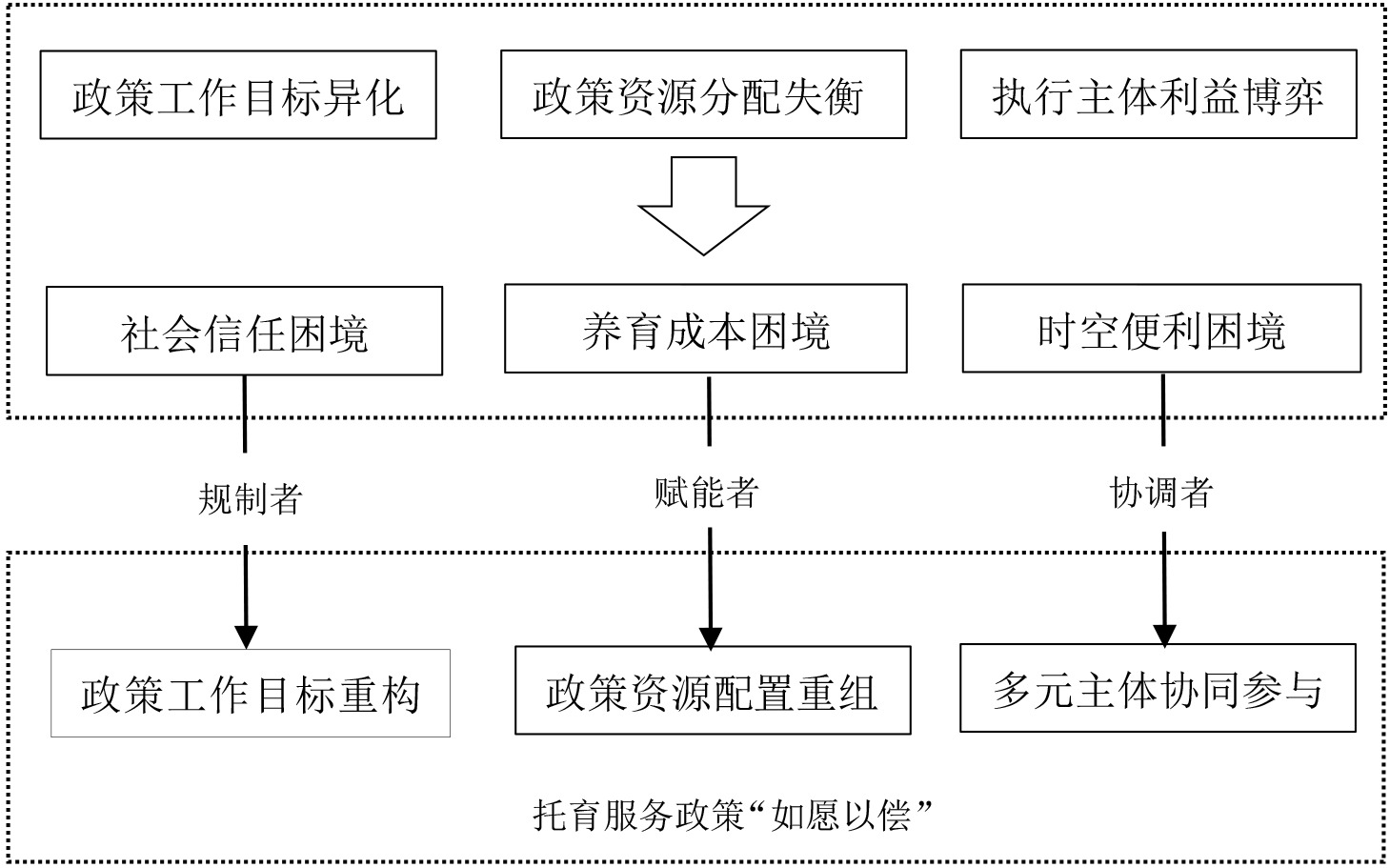
在人口负增长与超老龄化交织的现实背景下,我国出台了一系列托育相关政策,以解决群众孩子照料困难和促进生育水平适度提高为政策目标。但在政策的实施过程中,政策设计的美好初衷在某种程度上却事与愿违。其背后的原因值得深究。由此,采用扎根理论的方法,对知乎、微博、小红书、抖音四平台爬取的数据和实地访谈数据进行三级编码分析,从个体和机构两个维度分析托育服务政策实施的现状,在政策执行理论的视角下探究托育服务供需困境背后的深层原因,揭示政策目标与实践落差的微观机制,以期使托育服务政策得以“如愿以偿”。研究发现政策工作目标异化、政策资源分配失衡、执行主体利益博弈最终导致目标群体深陷养育成本困境、时空便利困境和社会信任困境,引发对托育服务的三重抵抗,政策目标与实践效果出现显著偏差。政府需要通过政策工作目标重构、政策资源配置重组、多元主体协同参与的路径破解托育服务的供需困境。

关键词: 托育服务, 生育支持, 政策目标, 政策执行, 扎根理论

Abstract:

Against the backdrop of negative population growth intertwined with hyper-ageing, China has introduced a series of childcare policies aimed at addressing public difficulties in childcare and promoting a moderate increase in fertility rates. However, during implementation, the well-intentioned design of these policies has, to some extent, produced unintended consequences. The underlying reasons warrant thorough investigation. Consequently, this paper employs grounded theory methodology to conduct a three-tier coding analysis of data extracted fromZhihu, Weibo, Rednote, and Tiktok platforms. Analyzing the current state of childcare policy implementation from both individual and institutional perspectives, it explores the underlying causes of the supply-demand dilemma within childcare services through the lens of policy execution theory. This reveals the micro-mechanisms behind the gap between policy objectives and practice, enabling childcare policies to achieve their intended outcomes. Findings indicate that the alienation of policy objectives, imbalanced resource allocation, and conflicting interests among implementing entities ultimately trap target groups in a triple bind: escalating childcare costs, spatial-temporal constraints, and social trust deficits. This triggers threefold resistance to childcare services, resulting in significant divergence between policy aims and practical outcomes. Governments must address this supply-demand impasse by reconfiguring policy objectives, restructuring resource allocation, and fostering multi-stakeholder collaboration.

Key words: childcare services, fertility support, policy objective, policy implementation, grounded theory

中图分类号: